
April 7, 2026

Energy Efficiency & Optimization
Over the last decade, the explosion of generative AI and large-scale cloud services has driven a sharp increase in energy demand across data centres. Canada’s data centres are no exception: their share of electricity consumption is growing as hyperscale operations expand, driven by AI workloads from tech firms, cloud platforms, and enterprise compute.
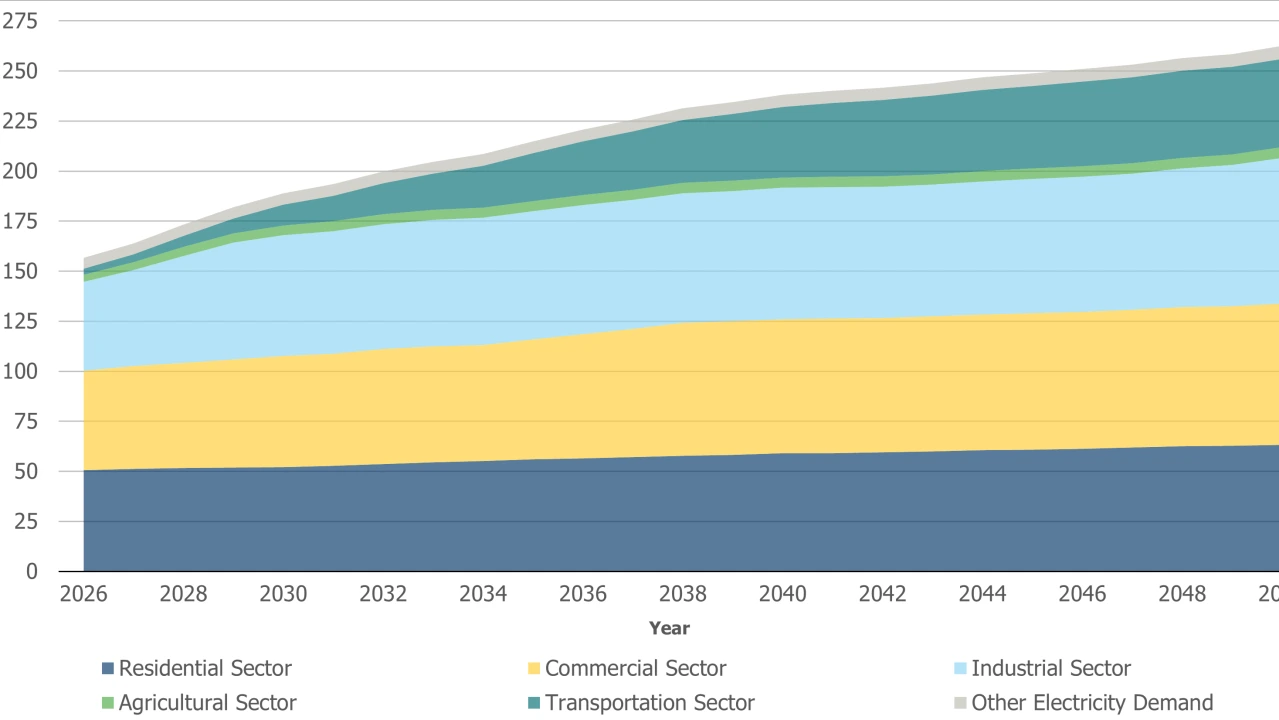
A 2025 report from Ontario’s Independent Electricity System Operator forecasts that data centre load growth could account for as much as 13 % of new commercial electricity demand over the next decade. That’s a non-trivial load for a grid still managing industrial demand, electrification growth, and capacity planning. The same report notes that while Ontario’s grid is low-carbon due to hydro and nuclear, the quantity of electricity used still matters for costs and for regional resource planning. (IESO)
Internationally, studies continue to show that data centres, especially those running large AI models, have significant power draws. A 2025 assessment published in The Guardian highlighted that if current trends continue, AI could account for nearly half of total data centre electricity demand worldwide within a few years, primarily driven by training and inference workloads at hyperscale cloud providers. (The Guardian)
Beyond electricity, water use for cooling has become a material environmental consideration in regions where data centres cluster. In Canada and the U.S., community and environmental groups have raised concerns about large data facilities’ water draws for cooling systems, a factor in local resource planning and permitting.
But here’s where context matters: AI is also a tool that helps end users optimize energy demand, detect waste, and identify efficiency measures with strong ROI. It can also optimize supply requirements, whether from the grid or behind-the-meter generation.
Governments and utilities are actively investing in AI for energy optimization. The International Energy Agency’s 2024 Energy and AI report describes multiple deployments where AI is reducing energy use in buildings, industrial systems, and grids by predicting demand, optimizing operations, and reducing waste.
Platforms like Envirally and 360 GrO fall into this latter category: applying AI and data analytics to help companies measure, monitor, and reduce their operational energy usage and cost. That’s a fundamentally different application than the compute power used to run AI models themselves. One is a new source of demand; the other is a reduction in demand.
From a policy perspective, Canada has recognized this duality. The federal government’s Canadian Sovereign AI Compute Strategy invests in domestic compute capacity while also embedding sustainability considerations into data centre planning, and emphasizing the optimization of energy supply, efficiency and environmental performance. At the same time, Natural Resources Canada has published best-practice guides for data centre energy efficiency designed to lower energy use intensity (kWh per compute unit). (ISED Canada)
To be clear: expanding AI workloads will continue to consume significant energy. Planning for that demand is essential. But treating AI only as an energy sink misses its leveraged value, autonomously detecting waste, optimizing usage, and smoothing grid dynamics.
In energy usage, context is everything. The real question is whether the net effect of AI on an organization’s energy use and emissions is positive when deployed intelligently.
This perspective matters for sustainability strategies: focusing exclusively on compute energy misses the far larger leverage point, which is reducing waste and inefficiency in operational systems through data-driven optimization.
Status:
OG Link:
Notes:
.webp)