

April 7, 2026
Energy Industry
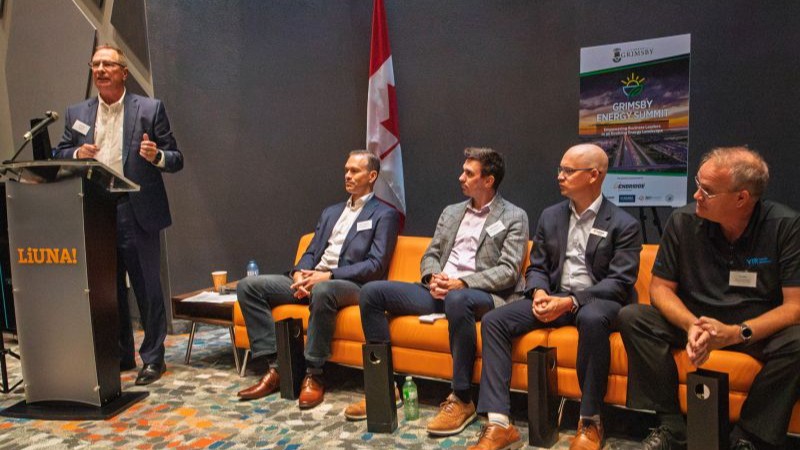
At the recent Grimsby Energy Summit, two panels sat just meters apart, yet their perspectives reflected different operating realities.
One group of utility executives and energy suppliers, moderated by Amy La Selva (Grimsby Power Inc.) and featuring Mike Risavy (IESO), Ron Clark (Aird & Berlis LLP), Graham Guest (Walker Industries), Brian Lennie (Enbridge Gas), and Jessica Linthorne (Nuclear Innovation Institute), focused on regulatory cycles, long-range planning, and infrastructure capacity.
The other, featuring industrial businesses moderated by Lisa Brodeur, PMP (360 Energy Inc.) with panelists Richard Pankratz, P.Eng., LEED AP, CEM (Niagara Region), Jim Hills (VTR Feeder Solutions), Mike Kubes (Niagara Industrial Association / Kit Steel), @Patrick O'brien (Andrew Peller Limited), and Tom Plute (Lake Foundry 2020 Ltd.), spoke from the urgency of expansion timelines, competitive pressures, and customer expectations. The distance between these perspectives shapes who will grow in Ontario, and who will wait in a queue for the energy they need.
This disconnect is not a misunderstanding. It reflects a structural gap in how the energy system functions and how businesses make decisions under mounting competitive pressure. If that divide persists, communities in Niagara and across Canada will struggle to secure and keep investment.
“Ontario has attracted billions in new investment, but the wires and pipes needed to serve that load do not yet exist. Customers need energy now, long before infrastructure is ready.”
Ontario’s generating capacity is strong. Nuclear life-extensions, hydro upgrades, and distributed renewables contribute to a reliable overall mix. The challenge lies in delivering that energy to the places where it is urgently required.
Constraints utilities laid out include:
These are real limitations. They shape how fast utilities can move, even when they recognize the needs of industry and want to accelerate. Utilities are accountable to regulators who require certainty before approving major capital investment. That means confirmed demand must be visible early, long before the customer submits a connection request.
“Energy used to be taken for granted. It showed up, the bill arrived, and that was the end of the conversation. That world is changing.”
Industrial customers no longer experience energy as a quiet background service. High prices, reliability requirements, electrification mandates, and customer sustainability expectations are reshaping cost structures and investment plans. For fast-growing operations, waiting seven to fifteen years for a connection decision is simply not feasible.
Key realities industrial leaders are acknowledging:
Emerging leaders are treating energy as a controllable variable that requires strategy. Those who continue to budget for it as a fixed expense risk delays, higher costs, lost contracts, and stalled expansion.
Supply-side teams speak a language of system reliability, cost-of-service regulation, and multi-decade capital planning. Customers make decisions in budgeting cycles, supplier negotiations, and market windows that close quickly. Both are justified in their priorities. The problem is the lack of shared translation between them.
When communication comes too late:
The price of waiting is economic activity leaving Ontario.
One panellist captured the solution succinctly: “No more silos. Everyone must talk to each other earlier; customers with customers, customers with utilities, and utilities with regulators.”
Practical actions that emerged from the Summit:
The companies that move earliest will secure capacity. Those who assume the grid will respond only when needed are likely to find themselves stalled.
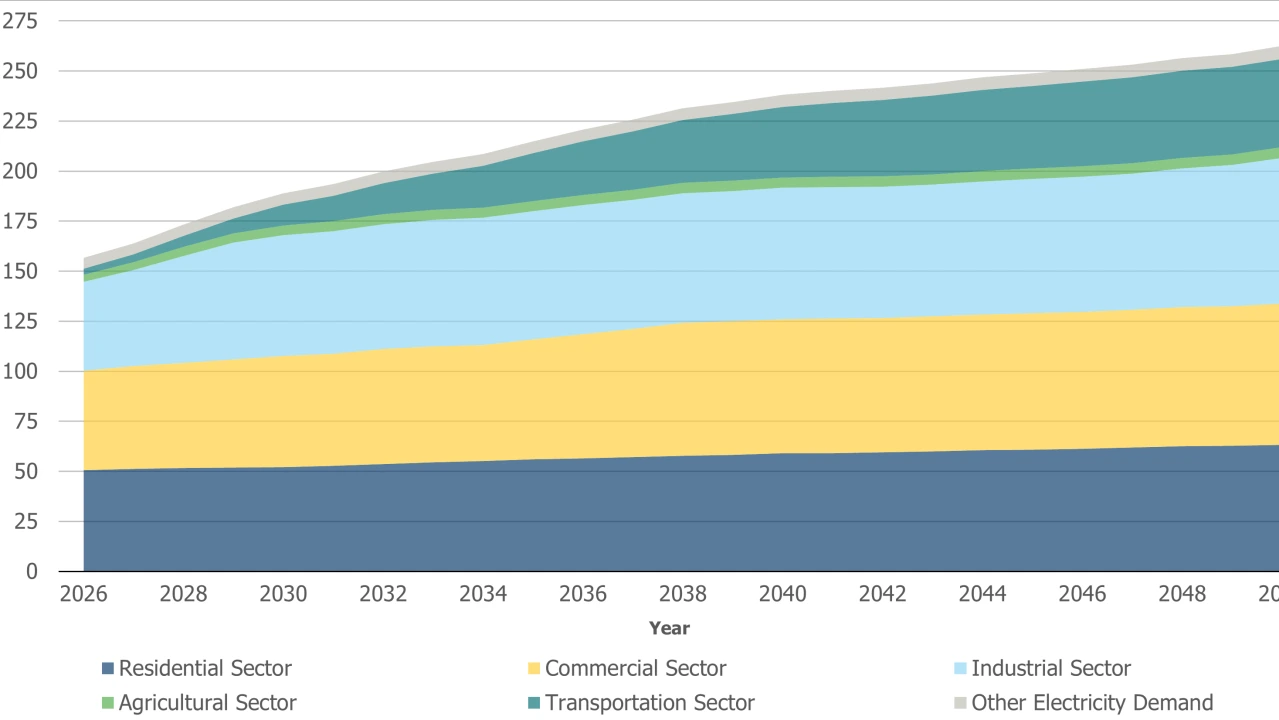
Load growth is accelerating faster than infrastructure can be built. Communities like Grimsby want to attract new employers, but they require certainty that substations, gas supply, and water services can scale to match that ambition. Energy readiness will dictate where manufacturing and agri-food investment goes next.
This is the moment for business leaders to get ahead of the system rather than caught inside it.
Upcoming articles will continue to explore how customers, utilities, and municipalities can work together so that the next era of economic development isn’t defined by energy limitations, but by energy-enabled growth.
Status:
OG Link:
Notes:
.webp)