
Energy Management
March 30, 2026

Energy Efficiency & Optimization
This session was designed for organizations trying to understand why electricity costs in Ontario are rising so sharply and what, realistically, can be done about it.
David Arkell (360 Energy Inc.), Gary L. Wight, CPA. (Nexus Energy Inc.), and Mike Risavy (Independent Electricity System Operator (IESO)) walked through current pricing data, system conditions, and planning forecasts to explain how Ontario’s electricity market is behaving today, not how it used to behave.
On January 28th, Ontario’s day-ahead electricity market cleared at average prices above $480/MWh, with peak hours exceeding $640/MWh. The weighted average price for the month was over $120/MWh, more than 50% higher than January 2025.
Arkell used a practical example to show what this means at the facility level. For a customer using roughly 10 million kWh per year, annual electricity costs that were approximately $322,000 in 2024 would exceed $1 million if January pricing were sustained.
These outcomes are not being driven by a single event. Speakers emphasized that pricing reflects a combination of structural and operational pressures that are now occurring at the same time.
Several factors were discussed in detail:
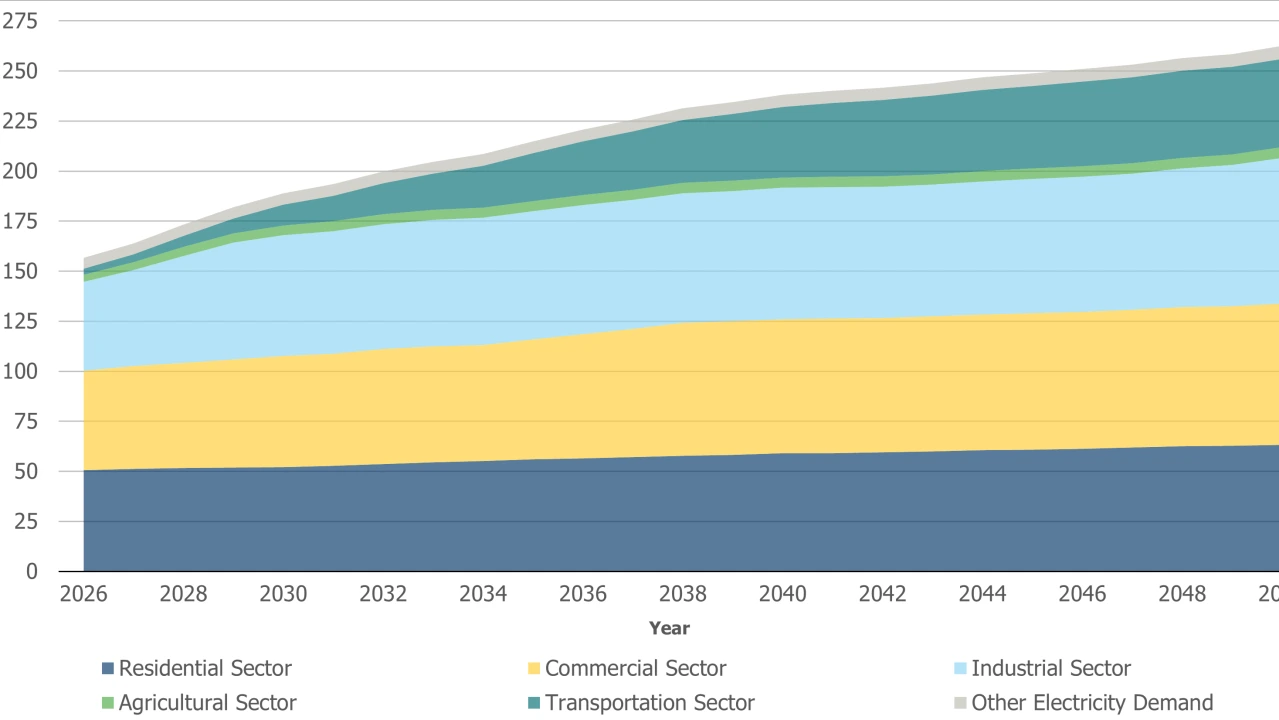
Electricity demand in Ontario is rising due to electrification, industrial expansion, and data centres. At the same time, the province is entering the largest nuclear refurbishment period it has ever faced, including the upcoming Pickering outage in 2026. This reduces available baseload generation during already tight conditions.
Natural gas generation now sets the marginal electricity price more frequently. As a result, electricity prices are increasingly sensitive to gas market volatility, cold weather, and global supply conditions.
Market renewal has also shifted costs that were previously embedded in Global Adjustment directly into hourly market prices. Congestion management, line losses, and real-time balancing now show up as visible volatility rather than being averaged out after the fact.
Gary Wight summarized this shift clearly: historical price averages are no longer a reliable planning reference. “We had $30 power not that long ago,” he said. “We’re not there anymore.”
Mike Risavy reviewed IESO reliability and demand forecasts, showing tightening supply-demand conditions in both summer and winter periods over the next several years. Ontario is returning to a dual-peaking system, where both heating and cooling demand create stress on the grid.
Import availability is also less reliable than it has been historically. Quebec, New York, and other interconnected markets are facing similar constraints, which limits the ability to rely on low-cost imports during peak periods.
In practical terms, this means scarcity pricing is no longer exceptional. It is becoming a regular feature of the market.
The webinar also outlined specific actions customers can take in response to how prices are now forming in the market.
First, speakers emphasized the importance of day-ahead market pricing. With costs now clearing hour-by-hour, visibility into day-ahead prices provides an early signal of high-cost periods, rather than discovering exposure after invoices are issued.
Second, load optimization has become more critical than total annual consumption alone. When electricity is used now plays a much larger role in cost outcomes, particularly during winter peaks and system-constrained hours.
Third, the session highlighted the need for senior management involvement. Electricity price volatility is no longer a facilities-level issue; it directly affects budgeting, operating margins, and risk, and requires alignment at a leadership level.
Finally, hedging and structured procurement strategies were discussed as tools for managing volatility and cost uncertainty. The objective is not short-term market timing, but cost certainty and risk control in an increasingly volatile environment.
A consistent theme across the session was that passive electricity management carries materially more risk than it did in the past.
Relying solely on historical averages, Global Adjustment optimization, or annual budgeting assumptions does not reflect how the market now clears. Customers need to understand when they consume electricity, how their load behaves during high-price hours, and how exposed they are to volatility.
Hedging was discussed not as a way to “beat the market,” but as a risk-management tool. As Wight noted, “It’s not about making money. It’s about managing volatility.” The objective is cost certainty and margin protection, not short-term price wins.
Arkell also emphasized that electricity exposure can no longer sit entirely with one person or a energy managers. Pricing volatility now affects operating costs, budgeting, and risk in ways that require senior management awareness and involvement.
Many organizations lack:
This is where most cost exposure now sits.
This webinar was the first in a series focused on helping organizations understand how Ontario’s electricity market has changed and how to respond in practical terms.
If you missed the session and want to understand how these conditions apply to your facilities, load profile, or procurement strategy, the 360 Energy team works directly with customers to assess exposure, identify risk, and develop active management approaches suited to today’s evolving energy market.
Status:
OG Link:
Notes:
.webp)