

April 7, 2026

Energy Industry
Anyone assuming Ontario’s energy market will look familiar in five years is setting themselves up for trouble. That reality was clear to Reg Freake. A retired executive with European experience and now a Grimsby Councillor and Chair of the Economic Development Advisory Committee, he championed the Energy Summit to raise the alarm for businesses across Grimsby and the wider Niagara region.”
The Summit brought together Mayor Jeff Jordan, Associate Minister of Heavy Industry Sam Oosterhoff, utility leaders, and business executives to confront an underestimated reality: Ontario's energy system is transforming faster than communities, infrastructure, and businesses can adapt. The consequences will hit operating costs, reliability, and economic competitiveness directly
Why This Summit Mattered
The timing is key here. Energy demand, infrastructure limitations, and cost pressures are intensifying across Ontario while most businesses continue planning as if conditions are stable. The gap between what communities expect from the grid and what the grid can deliver is widening. That mismatch is already shaping community development and business investment decisions.
Mayor Jordan opened the event with a focus on what this means for Grimsby, Niagara, and similar municipalities. This is not a policy discussion for distant stakeholders. It determines whether regions like Niagara can support the economic activity they aim to attract.
A 25-Year Vision to Meet Needs Emerging in the Next Five
Associate Minister Sam Oosterhoff reinforced the province’s core challenge: planning a 25-year infrastructure pathway in an environment where new load requests, electrification needs, and industrial expansion are arriving far faster than anticipated. The tension between long infrastructure timelines and short decision horizons is becoming one of Ontario’s most pressing constraints.
Five Forces Reshaping Ontario’s Energy Future
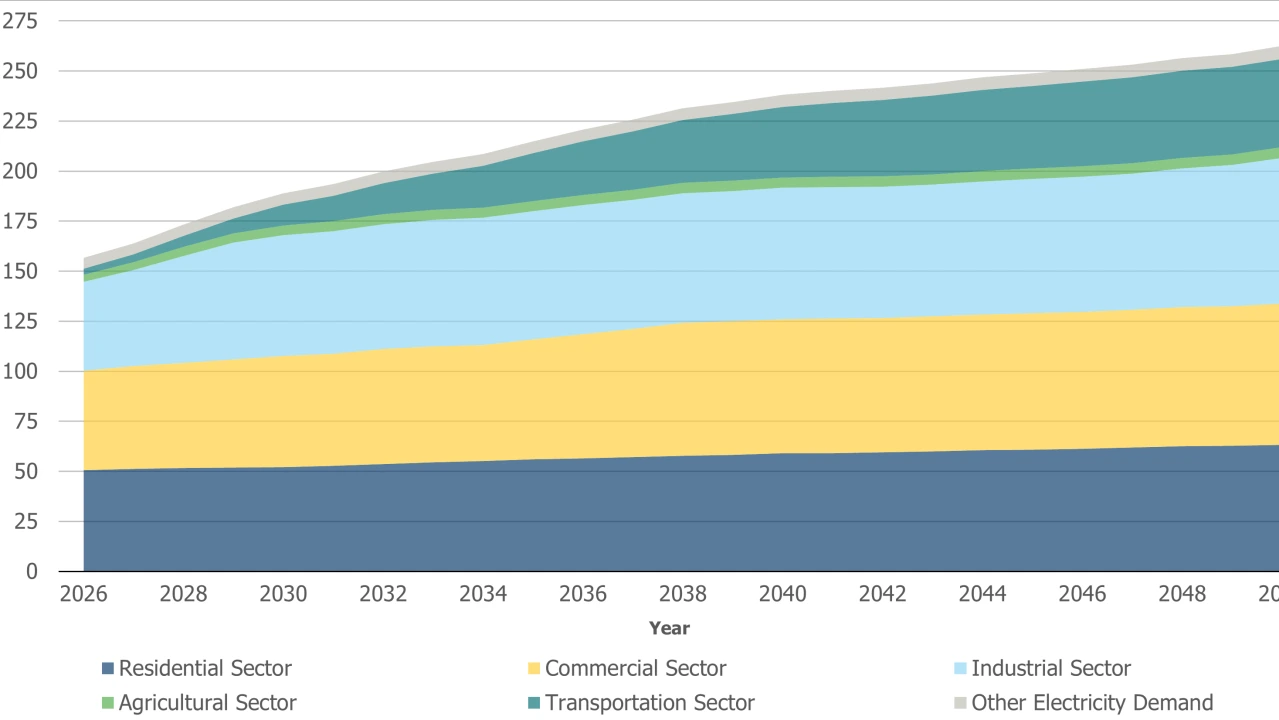
Kaleb Ruch, Director of Energy at Sussex Strategy Group, outlined five forces that now define the province’s energy trajectory. Each one requires businesses to adjust assumptions that held true even a few years ago.
What Comes Next
The Grimsby Energy Summit clarified how quickly expectations are changing for customers, suppliers, and communities. The province is entering a period where connection timelines, infrastructure readiness, and operational discipline will determine who moves forward with confidence and who sits in a queue waiting for capacity.
Upcoming articles will examine the perspectives of the energy supply panel and the end-user panel, connect these five forces to real decisions facing Ontario businesses, and outline the actions organizations need to take now to avoid being constrained later.
This is the first article in a series on insights from the Grimsby Energy Summit. Further sections will explore what Ontario’s energy transition means for competitiveness, planning, and operational strategy.
Status:
OG Link:
Notes:
.webp)