

April 7, 2026

Energy Management
Here's what most North American executives are missing: the era of cheap, abundant energy and water is over. And if your company doesn't adapt how it manages these resources, you're going to hit a wall when you try to expand.
Consider this: a major Ontario manufacturer recently waited 24 months just to get approval for the additional power needed to expand their facility. By the time they were cleared, their competitor had already installed on-site solar and battery storage and captured their next contract. That’s how fast the ground is shifting.
For years, energy and water barely registered on corporate risk radars. Sure, CFOs grumbled about the bills, but nobody really managed these costs strategically. Why bother? We had plenty of everything, and prices were reasonable compared to other parts of the world.
The pattern was always the same. Prices would spike, businesses would complain loudly, and politicians would scramble to respond. Sometimes they'd hide charges in the tax base. Sometimes they'd pump in subsidies. Natural gas was harder to manipulate because it's more market-driven, but governments found ways to intervene there too. Even carbon taxes, which seemed permanent just a few years ago, have quietly disappeared for many.
Here's what's happening behind the scenes, and most business leaders haven't caught on yet. We're running out of capacity, not just electricity, natural gas, or water, but all of it. This isn’t just an Ontario problem. Aging grids, drought-driven water restrictions, and global energy re-shoring are colliding to squeeze supply across North America. What used to be predictable is now political, physical, and financial risk all at once.
Think about what this means practically. You want to expand your facility? Add a production line? Switch to a different energy source? You might find out the centralized infrastructure can't deliver what you need in your timeframe. Building new power plants, transmission lines, and distribution networks takes years and billions of dollars. Our centralized utility systems weren't built for the kind of rapid change we're seeing now.
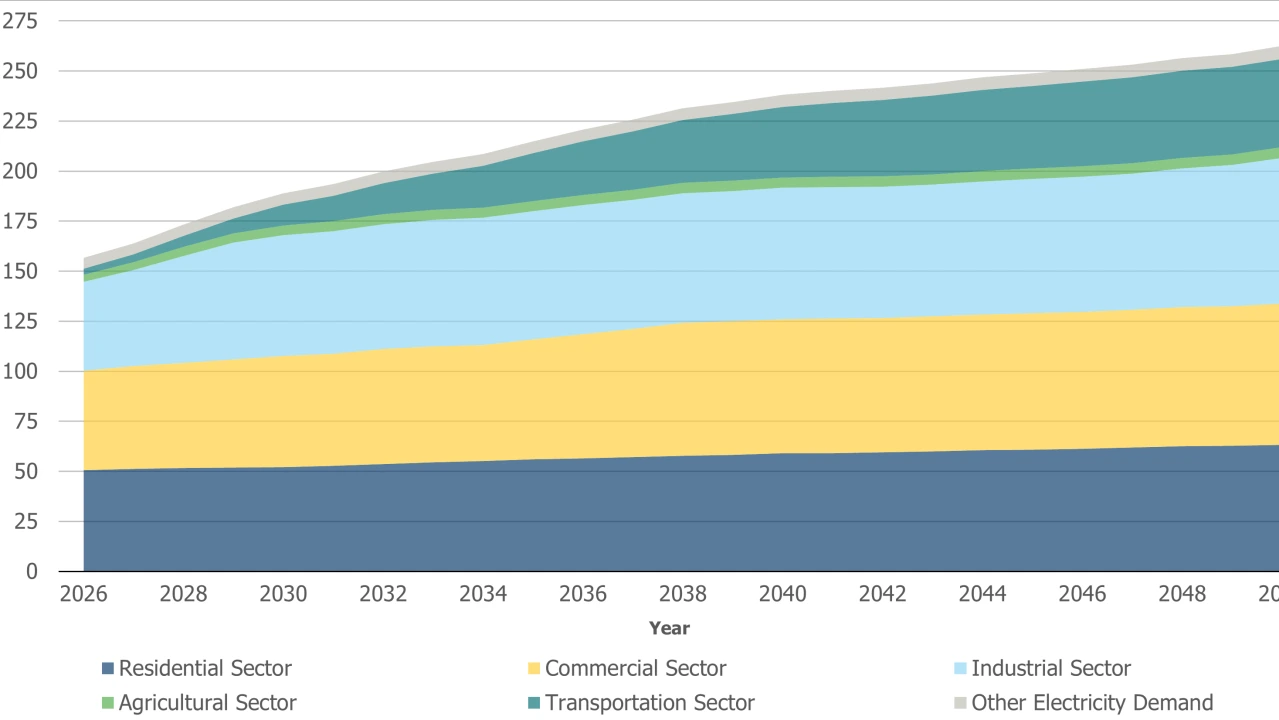
Just in the province of Ontario, forecasts show that electrical demand will increase by 75% by 2050. That is only 25 years from now. Demand is compounding faster than infrastructure can catch up. Even if every major project underway broke ground tomorrow, it wouldn’t offset the pace of electrification and population growth driving the load. It takes approximately seven years to build nuclear plants or carbon capture and storage facilities once there is regulatory approval.
Here's where risk management needs to evolve, and where most companies are way behind.
Up until now, energy decisions have lived entirely with the technical folks, engineers, facility managers, and operations. That's not going to cut it anymore. Every future capital plan, equipment purchase, and expansion forecast depends on energy availability and cost. If finance isn’t part of that equation, your forecasts are built on sand. Your finance department needs to be deeply involved in understanding energy risks, supporting operations, and helping senior leadership figure out what's possible now versus next month versus five years out.
This is brand-new territory for most accounting teams. To do it right, they need visibility they've never had before:
Once finance takes ownership, the first job is turning unknowns into numbers. Energy strategy begins with measurement, not machinery. Start with something that sounds simple but almost nobody does well: create a real energy (electricity, natural gas, propane) and water budget.
You need to forecast how much electricity, gas, and water each facility will use every month and annually, tied to your production plans. Then model what those resources will cost under different scenarios.
Most companies have never tracked this in detail because they never had to. Energy was just overhead, but here's where it gets interesting: Once you have a budget, you need to track variances every single month. Compare actual consumption and costs against your projections for every utility. Report this, then make sure everyone is accountable, from senior management to operations, engineering, and maintenance. Companies that do this well often see early wins within one quarter, such as identifying billing errors, correcting demand charges, or uncovering waste in idle equipment.
When companies actually commit to this process, something shifts. Energy and water stop being mysterious forces nobody can control. Different departments start coordinating. People who used to shrug and say "nothing we can do about it" suddenly start finding solutions.
Companies that get serious about managing all their utilities typically save 5% on energy and water annually. Doesn't sound like much, right?
Except, depending on your operation, that's thousands or even millions of dollars going straight to your bottom line. For a $50 million operation, that’s $2.5 million a year. Multiply that by five years, and it’s a self-funded growth engine.
Here's the best part: about half of those savings cost you nothing. Zero capital. They come from fixing operational issues nobody was paying attention to, changing behaviours, and eliminating waste. The other half requires some investment, but we're talking minimal capital outlay. And this applies across the board with electricity, natural gas, water, compressed air, steam, whatever your operation depends on.
Resource constraints aren’t coming; they are already shaping who gets to grow. The companies treating energy and water as strategic assets, not just operating costs, will be the ones still expanding when the next constraint hits.
Companies that figure this out now will start treating energy and water as strategic assets instead of line items to complain about. Those are the ones that will be able to grow. The rest will be stuck waiting for infrastructure that may not arrive for years.
So, is your finance team ready to take this on? 360 Energy helps organizations build that capability fast.
Status:
OG Link:
Notes:
.webp)