
Energy Management
March 30, 2026

Energy Industry
I’ve just returned from Hannover Messe, one of the largest manufacturing shows in the world, and it prompted some serious reflection on how we approach energy management in Canada.
What stood out immediately was that I was attending more than a simple trade show. The opening ceremony set the tone: senior government officials from Germany and Canada, manufacturing CEOs, and academics all spoke to the same reality that energy and carbon are now inseparable from industrial competitiveness. In Europe, energy is being treated as a strategic priority. That mindset is miles ahead.
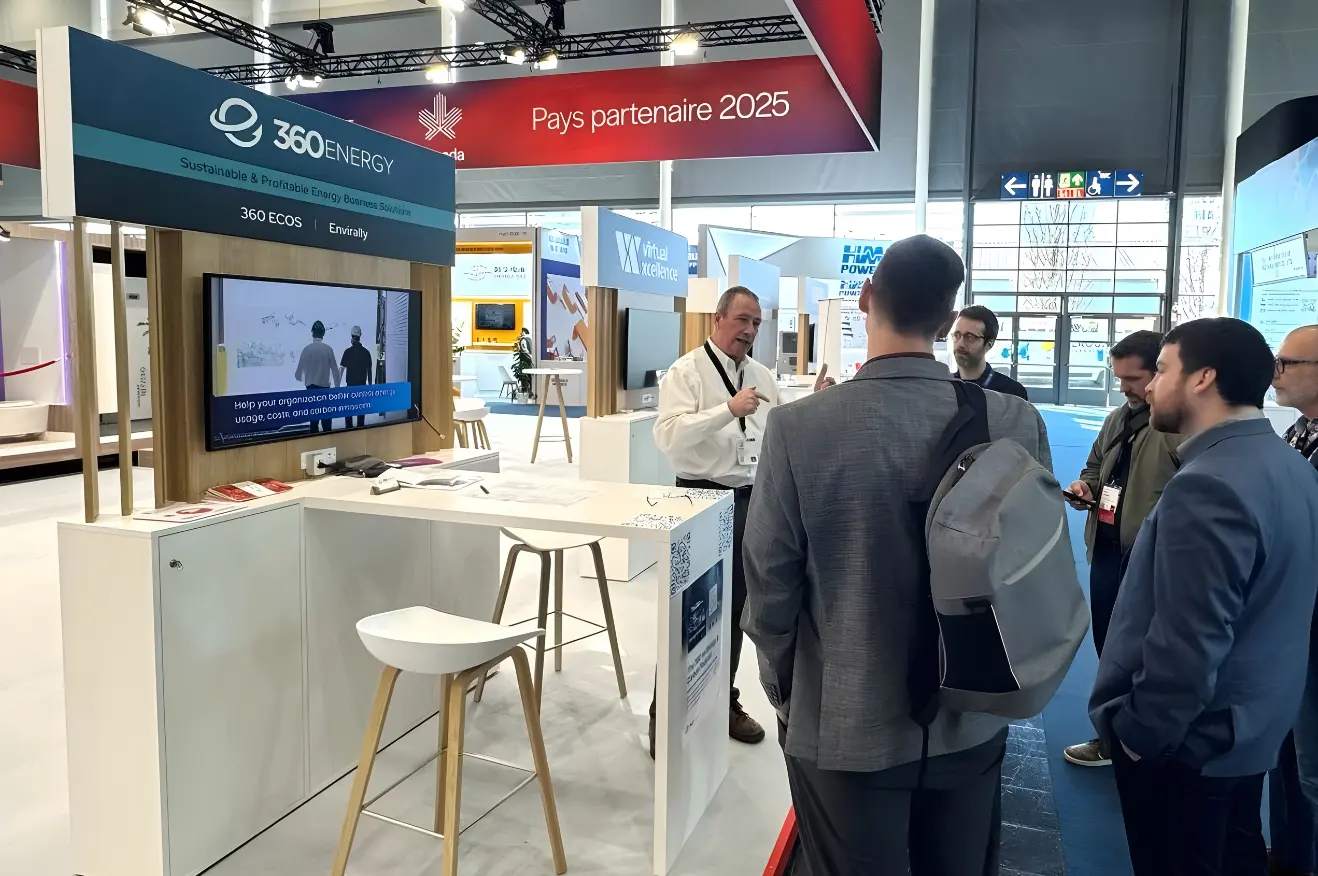
One of the clearest contrasts was how integrated their thinking is, by which energy isn’t discussed as a utility cost or a reporting exercise, but as a system that cuts across operations, strategy, and leadership. Siemens’ CEO described the need for an “energy operating system”, a framework that connects people, data, technology, and decision-making to actively manage both costs and emissions. That concept closely aligns with how we’ve approached energy management at 360 Energy for years.
Throughout the week, we had conversations with manufacturers, utilities, and partners from Turkey, Poland, the Netherlands, and Germany. Some were exploring solutions, others were looking for collaboration. Canada came up often in those discussions, and there was genuine interest in working together. I found it evident that they were not just theoritcal discussions.
Europe’s energy prices remain three to four times higher than what we see in Canada. That pressure has driven real commitment. Energy decisions there are tied directly to competitiveness, resilience, affordability, and carbon reduction all at once. Two themes surfaced repeatedly: hydrogen and artificial intelligence. Hydrogen is gaining momentum due to Europe’s renewables-heavy grid and limited access to natural gas. AI, meanwhile, is already embedded in day-to-day energy management, optimizing load, costs, and emissions beyond pilot projects or experimentation.
.webp)
Another notable difference is how energy itself is defined. Electricity and natural gas aren’t treated as separate silos, instead energy is discussed as a whole, often measured and managed in aggregate. It’s a small distinction, but it reflects a much more holistic approach. The level of fluency was also striking, as people understood market structures, pricing dynamics, and usage patterns in detail. As a result, energy management isn’t something reviewed once a year; it’s part of daily operational decision-making.
What this reinforced for me is that much of what we’ve been building at 360 Energy since 1995: strong data foundations, integrated systems, and active energy management, is exactly where the global conversation is heading. The opportunity is both about what we can contribute internationally, and what we can bring back to Canada.
We’ve always believed that energy management is not only a technical issue, but a leadership issue too. Hannover Messe made that unmistakably clear.
David Arkell
President & CEO
Status:
OG Link:
Notes:
.webp)