

April 7, 2026
Energy Management
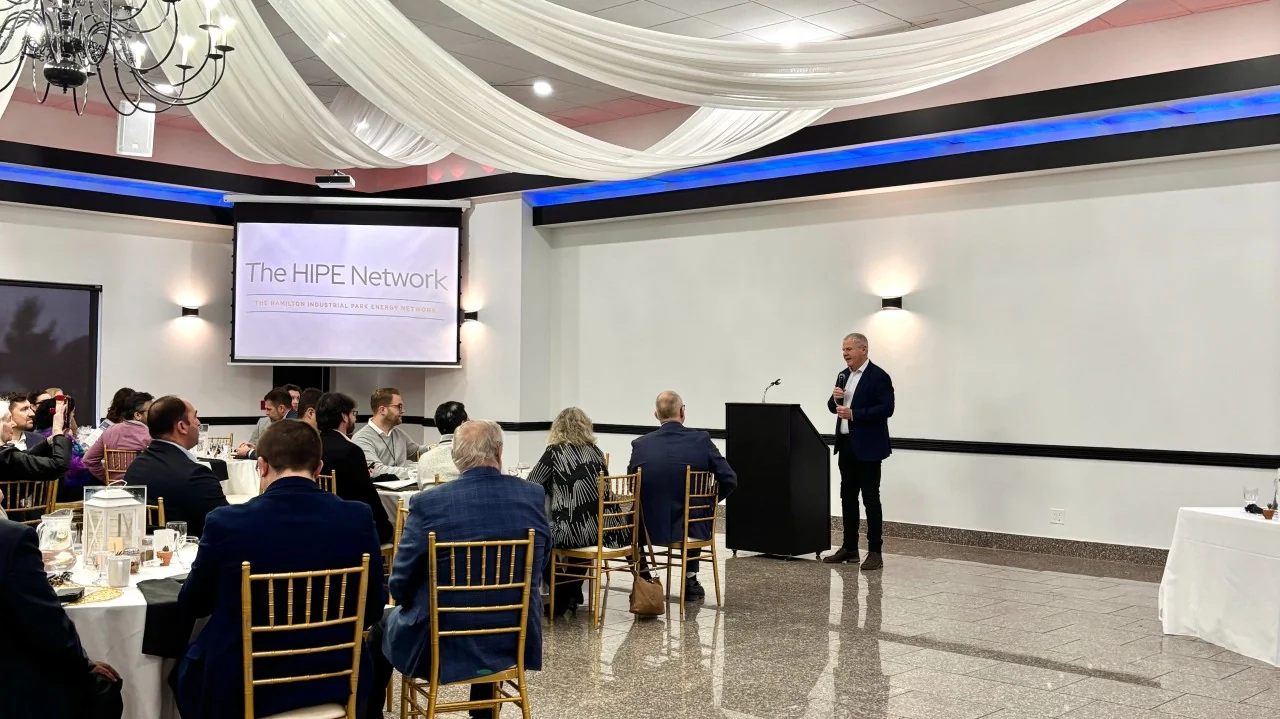
At the January HIPE Network breakfast, Jayson Myers, CEO of NGen Canada, spoke about how energy, data, and industrial AI are increasingly shaping competitiveness, risk, and decision-making for manufacturers.
His remarks focused less on tools and more on why many initiatives fail and what needs to be in place before technology can deliver value.
Jayson was explicit that many digital, AI, and advanced manufacturing initiatives stall because they start with tools rather than business outcomes.
He pointed to a consistent pattern across industry: organizations invest in platforms or pilots without first defining decision-rights, ownership, and what success actually looks like. In those cases, data accumulates but does not change decisions.
The takeaway was straightforward: energy systems, AI, and digital tools only work when they are tied to clear operational and financial objectives, with accountability across teams.
A central theme of the keynote was that managing energy is no longer solely within procurement and or engineering silo one time, a one-time-a-year decision.
Jayson emphasized that value is created when energy is treated as a continuous improvement process and managed across operations, production, IT, data, and finance. When energy is treated as a siloed technical issue, organizations struggle to connect usage patterns to cost exposure, capital planning, and risk.
This framing aligns with what many industrial sites are experiencing: energy decisions now affect margins, capacity planning, and long-term competitiveness.
Jayson drew a clear distinction between general AI tools and industrial AI systems.
Industrial AI operates in real time, interfaces directly with physical assets, and influences production decisions. Because of this, it depends on reliable data streams, secure integration, and governance that accounts for safety and operational risk.
He stressed that without those foundations, industrial AI introduces new vulnerabilities rather than efficiencies. Readiness, integration, and control matter more than speed.
Jayson emphasized that measuring energy is critical, but data quality is what underpins effective governance.
Surprisingly few organizations actually measure their energy use. Yet many who measure other metrics extensively still struggle to act on what they collect. The issue is the absence of structure around how data is used, who owns it, and how it informs decisions.
For energy, this means usage data without price context, or price data without operational insight, leaves organizations exposed to volatility and blind to opportunity.
Jayson highlighted how expectations around energy and carbon management are increasingly driven by external stakeholders.
Insurers, lenders, customers, and regulators are all raising expectations around credible measurement, reporting, and reduction strategies. These expectations are already influencing access to insurance, financing, and commercial opportunities.
For manufacturers, this shifts energy and carbon management from a compliance exercise to a business credibility issue.
Jayson closed by emphasizing that no single organization can address these challenges alone.
As systems become more interconnected and risks more complex, collaboration across supply chains, technology providers, research organizations, and peer networks becomes essential. Shared intelligence and coordinated approaches reduce risk and accelerate learning.
This was positioned as a practical necessity rather than a philosophical goal.
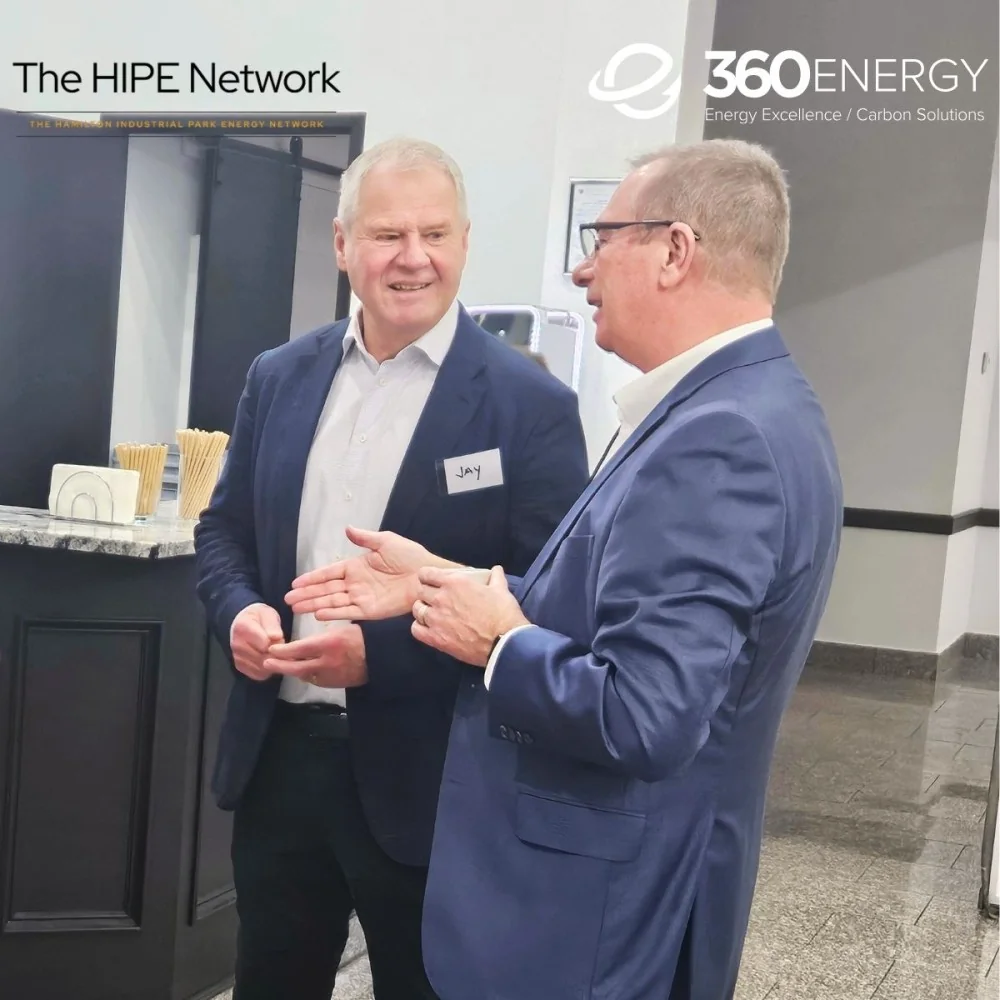
Jayson’s presentation landed because he noted energy and managing energy as part of how a business is run, not a separate technical exercise. The pressure on manufacturers is coming from multiple directions at once: rising electricity costs, tighter grid capacity, customer and insurer expectations, and increasing requirements around carbon measurement and reporting. None of those issues sit cleanly in one department, and none of them can be solved with a single tool or incentive.
What became clear is that the sites making progress are the ones that capture and understand their energy data, share it across operations and finance, and use it to support decisions about risk, capital, and priorities. Measurement matters, but only when it is tied to clear ownership and action. Technology can help, but only when it is deployed in the service of defined business outcomes and real operational constraints.
This is where the HIPE Network is meant to be useful. HIPE is designed to help sites build a baseline, understand their exposure, learn from peers facing similar constraints, and move forward in a practical way. That support is especially important for small and mid-sized facilities that do not have dedicated internal teams to manage energy, programs, and data on their own.
The next step is to keep the conversation local and specific. Over the coming weeks, HIPE will be hosting small coffee meetings in each individual industrial park across Hamilton. These sessions are meant to create space for site-level discussion around shared challenges, program pathways, and what is working on the ground.
If you attended the January 14 breakfast, we encouraged you to take part in the upcoming park-level coffee chats. If you are new to HIPE, this is a good place to start.
Status:
OG Link:
Notes:
.webp)